
Dental Veneer Preparation

Cosmetic problems in dentistry can be resolved by the use of veneers. Veneers are used in patients who need a resurfacing of their front teeth. This can be due to discolored teeth, malformed teeth, crowding or space between teeth, and also when part of the teeth structure is lost because of various reasons like accidents, attrition, abrasion etc. The esthetic makeover with veneers is really worth the effort and expense.
Before doing veneer preparation, the dentist has to inform the patient about the removal of a portion of enamel to achieve the desired results. However, the removed tooth structure is very less when compared with crown preparation.
Finished veneer preparation
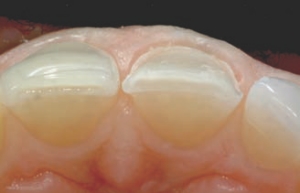
When preparing the tooth for a veneer, certain things should be kept in mind like the type of material, the desired thickness of the veneer and also the existing thickness of the enamel. Less structure is removed from the gingival third while more is removed from the middle and incisal third.
Initially, put depth cuts of 0.5 mm on the middle and incisal area. The reduction ranges from 0.5 at the gingival third to 1.2 mm at the incisal edges. Reduce the facial surface uniformly till the desired depth is achieved. It is not necessary to confine the preparation to enamel; it can be well extended to the dentin without affecting the bond strength. Maintain chamfer finish line throughout the preparation.
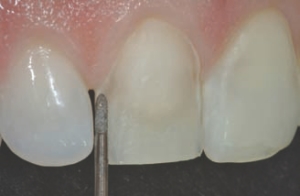
As the gingival section requires less tooth structure removal, the reduction is done during placement of margins. In the gingival areas, the margin should be extended up to the crest of the gingiva, and even 0.5 mm subgingivally if significant discoloration is visible. Make a chamfer margin with the round tip of the diamond bur. The gingival margin can be extended lingually, past the proximal contacts or up to the lingual proximal line angle if there is no contact between the teeth.
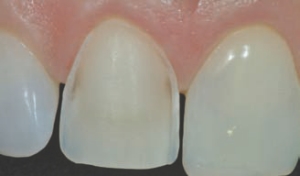
There is no hard and fast rule for the inclusion of the incisal area. It can be avoided or included based on a case by case basis. Insical reduction is not always required in the preparation of veneers. When the incisors are involved in anterior guidance, it is better to do incisal reduction and place the bevel at the lingual cavosurface angle. If there is sufficient thickness at the incisal margin, make a lingual finish line which is chamfer that will be continuous with the proximal finish line.

BOOK AN APPOINTMENT ONLINE+91 80 40985105 +91 9341991655 Send your queries to vcare32@gmail.com |


